
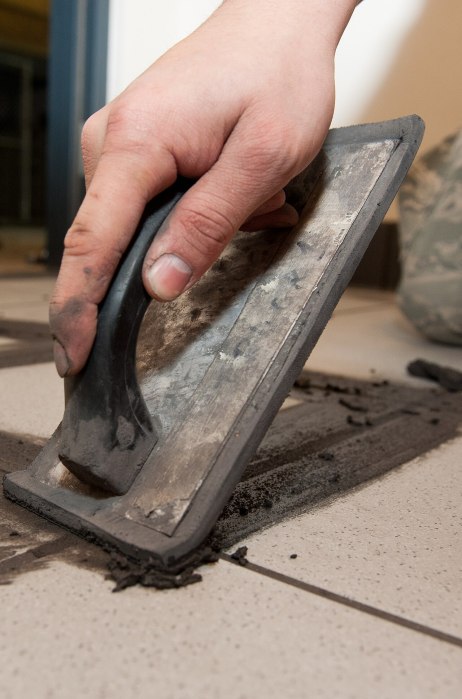
You chose the right tile and the right adhesive. But the joints between tiles are where water gets in, dirt builds up and mould grows. The grout you pick decides how your tiled surface looks in five years. Here is a plain comparison of the two main options.
What is cement grout?
Cement grout is a blend of cement, fine sand, pigments and additives, mixed with water on site. It is the traditional choice and still works well for dry, low-traffic areas.
- Pros: low cost, easy to mix and apply, forgiving for beginners, easy to clean off tile faces.
- Cons: porous, so it absorbs water and stains; can crack or shrink; usually needs a sealer and re-grouting over time.
What is epoxy grout?
Epoxy grout is a two- or three-part system of epoxy resin, hardener and filler. Once cured, it forms a dense, non-porous joint that is far tougher than cement.
- Pros: waterproof, stain-proof, resistant to acids and chemicals, no sealing needed, colour stays uniform, very long life.
- Cons: higher material cost, short working time, needs a skilled applicator and quick cleaning of tile faces.
Side-by-side comparison
| Feature | Cement grout | Epoxy grout |
|---|---|---|
| Water resistance | Low (porous) | Excellent (non-porous) |
| Stain resistance | Poor without sealer | Excellent |
| Chemical resistance | Low | High |
| Mould and fungus | Prone over time | Highly resistant |
| Cost | Low | Higher upfront |
| Ease of application | Easy | Needs skill |
| Maintenance | Sealing and re-grouting | Minimal |
Where to use each
Choose epoxy grout for: bathrooms and shower areas, kitchen counters and backsplashes, swimming pools, commercial kitchens, hospitals, labs, and any floor that sees heavy cleaning or chemicals.
Cement grout is fine for: bedroom and living room floors, dry wall cladding, and budget projects where joints stay dry.
Tips for a lasting grout job
- Let the tile adhesive cure fully (usually 24 hours) before grouting.
- Rake joints clean of dust and excess adhesive to a uniform depth.
- For epoxy, mix only what you can use within its pot life and follow the exact ratio.
- Clean tile faces with a damp sponge while the grout is still fresh; cured epoxy haze is hard to remove.
- In wet areas, waterproof the substrate first. Grout seals joints, not the slab below.
The bottom line
Cement grout saves money today. Epoxy grout saves money, time and frustration over the life of the tiles. For any wet or high-use area, epoxy is worth the extra cost. Talk to the Fullproof team to find the right grout and adhesive combination for your project.